


Reportage
"We see Bangladesh not just as a market, but as a key connectivity hub linking South and Southeast Asia"

An Independent Newsweekly

Reportage
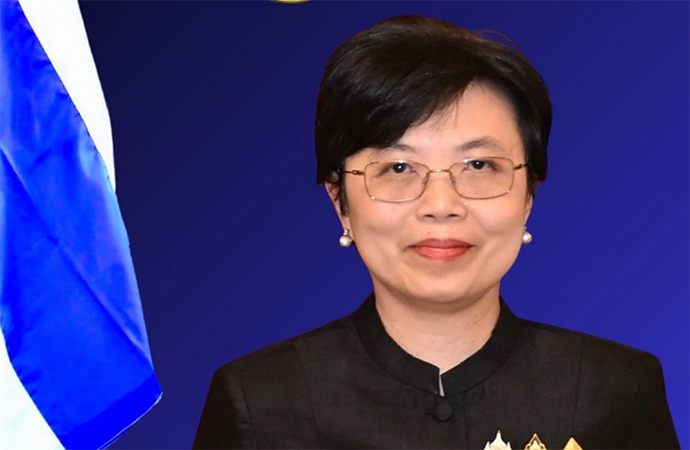
Ambassador of Thailand to Bangladesh Thitiporn Chirasawadi. Photo: Collected
Says Thai Ambassador Thitiporn Chirasawadi in an exclusive interview with AKM Moinuddin
UNB: Excellency, you described Bangladesh as a strategic country with growing importance for Thailand. How do you envision this relationship evolving over the next few years?
Ambassador Chirasawadi: We envision the next few years as a transformative period where our bilateral relationship graduates from a traditional trading partnership to a strategic economic engagement. Building on the momentum of our 50th anniversary of diplomatic ties celebrated recently, our primary goal is to initiate and finalize the Free Trade Agreement (FTA) negotiations as soon as possible, for which a Letter of Intent (LOI) was signed in April 2024. This agreement will be pivotal in dismantling tariff barriers and catalyzing bilateral trade beyond the current volume of approximately USD 1.2 billion. Furthermore, we see Bangladesh not just as a market but as a key connectivity hub linking South and Southeast Asia. With Thailand's "Look West" policy synergizing with Bangladesh's "Look East" policy, we anticipate a significant increase in Thai investment in Bangladesh's Export Processing Zones (EPZs), particularly in agro-processing and logistics. The evolution of our relations will be defined by this shift towards deeper economic integration and physical connectivity, fostering a resilient partnership that supports Bangladesh's graduation from LDC status in next year.
UNB: In what areas do you see potential for joint initiatives on sustainable development, climate resilience, or blue economy cooperation between Bangladesh and Thailand?
Ambassador Chirasawadi: Both our nations are maritime states with shared vulnerabilities to climate change, making the Blue Economy one of significant areas of cooperation. We see immense potential in operationalizing the Memorandum of Understanding (MOU} between the Port Authority of Thailand (Ranong Port) and the Chittagong Port Authority, signed in December 2021. Such a new maritime route can significantly shorten maritime transport time from the current 12-15 days to just 3-4 days, which can largely help save fuel and maritime environment. This collaboration can expand into sustainable port management, green logistics, and coastal resource conservation, ensuring our maritime activities drive economic growth without compromising marine ecosystems. Additionally, Thailand is eager to share expertise through our Bio-Circular-Green (BCG} Economy model, which promotes sustainability in agriculture and industry. We can launch joint initiatives in climate-smart agriculture and disaster risk reduction, leveraging Thailand's experience in sustainable development. Furthermore, we can co-develop solutions for renewable energy and sustainable fisheries that directly benefit our coastal communities.
UNB: Having previously served in South Asia (Nepal), how will your past experiences influence your diplomatic priorities and the way you engage with Bangladesh during your tenure?
Ambassador Chirasawadi: Drawing from previous experience in Nepal, I have observed the cultural values shared among South Asian countries, including Bangladesh. This has enabled me to understand the various contexts of these countries, particularly their local communities as well as regional context. Such understanding will contribute to the formulation of appropriate policies and cooperative approaches that can further advance the shared interests and prosperity of both countries in the years ahead.
UNB: You mentioned promoting economic cooperation with tangible benefits for both nations. What specific sectors or new initiatives do you see as the most promising for expanding Bangladesh-Thailand trade and investment?
Ambassador Chirasawadi: The most promising immediate agenda is the establishment of a direct coastal shipping route between Ranong Port and Chittagong Port. Once fully operational, this route will reduce maritime transport time from the current 12-15 days to just 3-4 days, significantly lowering logistics costs and enhancing the competitiveness of products from both nations. This initiative alone has the potential to create bilateral trade dynamics, making Thailand a more accessible source of raw materials for Bangladesh's industries. Furthermore, we see high-potential opportunities in food processing and the Halal industry. Thailand's expertise in food technology, combined with Bangladesh's vast domestic market, offers a lucrative landscape for joint ventures. Additionally, we are keen to expand cooperation in the energy sector and medical tourism. We also would like to thank Bangladeshi people for trusting Thailand's medical services. We look forward to doing more to serve the growing demand in this field.
UNB: What steps will the Royal Thai Embassy take to further enhance people-to-people exchanges, including tourism, education, and cultural collaboration between the two countries?
Ambassador Chirasawadi: The Royal Thai Embassy aims to support and expand our medical tourism, edu-tourism, as well as scholarship programs to deepen mutual understanding. At present, one particularly interesting initiative is the Thai Food Promotion Project in Bangladesh, implemented under the policy of "Thai Kitchen to the World." This initiative is believed to help promote Thai cuisine abroad and enhance Thailand's agricultural and food innovation by showcasing local Thai strengths to the international community from local to global. The Embassy seeks to foster stronger relations with Bangladesh by using food diplomacy to help strengthen people-to-people ties between the two countries together. Moreover, we aim to institutionalize regular cultural exchanges that go beyond annual festivals.We are exploring partnerships between Thai and Bangladeshi artistic institutions to co-create events that highlight our shared heritage and religious links, particularly in Buddhism. By facilitating direct interactions between our youth, artists, and educators, we hope to build a foundation of friendship that transcends diplomatic formalities and fosters a genuine, long-lasting bond between our peoples.
UNB: How does Thailand plan to work with Bangladesh during its 2025-2027 BIMSTEC chairmanship to strengthen regional connectivity and economic integration across South and Southeast Asia?
Ambassador Chirasawadi: Thailand fully supports Bangladesh's chairmanship and is committed to ensuring a seamless continuity of the "PRO BIMSTEC" agenda-Prosperous, Resilient, and Open, as outlined in the BIMSTEC Bangkok Vision 2030 during the chairmanship of Thailand. We will work closely with Dhaka to fast-track the conclusion of the BIMSTEC Free Trade Area negotiations, providing the technical support and diplomatic backing needed to build consensus among member states. Our shared goal is to transform the Bay of Bengal into a thriving economic corridor.
Specifically on connectivity, Thailand will coordinate with Bangladesh to accelerate the implementation of the BIMSTEC Master Plan for Transport Connectivity. We view Bangladesh as the vital bridge between South and Southeast Asia. Therefore, we will actively participate in working groups to push forward the Trilateral Highway's extension and its linkage to Bangladesh, ensuring that physical infrastructure is matched by soft infrastructure like cross-border motor vehicle agreements. More importantly, I am of the view that people-to-people connection has to be the crucial part of the regional connectivity.
UNB: Does Thailand see opportunities for greater cooperation with Bangladesh on strengthening democratic institutions, governance, or public administration capacity-building?
Ambassador Chirasawadi: Thailand views governance cooperation primarily through the lens of technical assistance and capacity building, facilitated by the Thailand International Cooperation Agency (TICA). We see significant opportunities to collaborate on public sector efficiency and digitization, sharing our experiences in e-governance and service delivery reforms. We are ready to organize training programs and exchange visits for public officials to share best practices in public administration and policy implementation.
Our approach is anchored in mutual respect and the exchange of technical know-how rather than prescriptive measures. We believe that robust institutions are built through continuous professional development and adapting successful administrative models to local contexts.
Therefore, we are open to partnering with Bangladesh's training institutes to co-develop modules on good governance, transparency, and public service innovation that align with Bangladesh's own national reform priorities.
UNB: As Bangladesh heads toward national elections, how does Thailand assess the role of political stability in fostering stronger regional cooperation within BIMSTEC and South Asia-Southeast Asia Connectivity?
Ambassador Chirasawadi: As a close friend and partner, we trust in the desire of the Bangladeshi people and their institutions to navigate this period. Our commitment to the Thailand-Bangladesh partnership remains steadfast regardless of political cycles. We are confident that a stable and prosperous Bangladesh will continue to play its indispensable role in the region, driving the momentum of South Asia-Southeast Asia connectivity that benefits all our citizens.
A Independent Newsweekly
© Copyright 2026 | Designed by ARK Reepon & Developed by Cosmos Group Software Team





Leave a Comment
Recent Posts
Is the international community ...
A spate of downgraded economic projections, from Bretton Woods to Mani ...
A Childhood Lesson in Arithmet ...
As children, we learned a simple mathematical rule: if we know the pri ...
Indian authorities launched a major security crackdo ..
Police dispersed garment workers from the Azampur ro ..
Why Saudi Arabia has struggled to defend itself agai ..
Iran-backed Houthis strike Saudi oil company Aramco’ ..